The $4,200 Lesson: Brand Strength Isn't Category-Wide
The most expensive medical equipment mistake I've made wasn't buying from the wrong brand. It was assuming a strong brand in one category meant a strong fit in another. In 2019, I ordered $4,200 worth of infusion pumps from a manufacturer I trusted. Six months later, they were still sitting in storage because the tubing connectors didn't match our existing IV lines. Nobody checked compatibility before we signed the PO. Not the rep, not my predecessor, not me.
I've been handling equipment procurement for ORs and ICUs for 11 years. In that time, I've made 14 documented mistakes that cost our department roughly $38,000 in wasted budget, re-stocking fees, and delays. I'm not sharing this to impress anyone—I maintain our pre-purchase checklist now because I got tired of explaining these failures to my director.
Here's the bottom line: brand reputation is category-specific, and assuming otherwise is a red flag in your own process.
What I Learned About Smiths Medical (And Any Other Brand)
Let me be clear about something: Smiths Medical makes good products. Their infusion pumps are reliable when properly matched to your setup. The Acapella Smiths Medical airway clearance device has been a solid performer for our respiratory patients—we've had good outcomes with it. But here's the honest limitation: being strong in infusion and airway doesn't mean the company covers everything you need.
We once tried to consolidate all our critical care purchases under one brand because, frankly, the administrative simplicity was tempting (one PO, one rep, one invoice). That worked fine for infusion pumps and the Acapella from Smiths Medical. But when we needed a hematology analyzer for our satellite lab, we quickly realized that wasn't their lane. We went with a different vendor for that. No drama. The mistake would have been trying to force-fit a brand into a category it doesn't specialize in.
This is the legacy myth I see in a lot of new procurement folks: they think a big brand equals a full catalog. That was maybe true 15 years ago when consolidation was the trend. Today, most manufacturers have category depth, not category breadth. You need to know which is which before you buy. I keep a simple table now—brand vs. category strength—and update it every quarter.
The CPAP vs. BiPAP Mistake That Cost Us a Week
I'm not a respiratory therapist, and I don't pretend to be. But I do need to know enough to order the right equipment. In 2021, I ordered three CPAP units for a post-op recovery area, only to find out the patient population needed BiPAP capabilities. That was an $1,800 mistake and a week of scrambling with loaner units from a neighboring department.
For anyone on the fence about the difference: CPAP delivers a constant pressure. BiPAP delivers two pressure levels—higher on inhale, lower on exhale. For straightforward OSA, CPAP is usually fine. For patients with certain respiratory conditions or who can't tolerate constant pressure, BiPAP is the better call. The "CPAP vs BiPAP" question gets searched constantly, but the clinical decision isn't a simple either/or—it depends on the patient. That's the honest limitation. No device is universally "better."
All CPAP and BiPAP devices sold in the US require FDA clearance (510(k) or De Novo), so the clearance itself isn't the differentiator—the clinical fit is. The lesson: don't let your procurement catalog become your clinical education. I now require a 10-minute consult with our respiratory lead before ordering any airway devices. Sounds obvious. Wasn't to me at the time.
Where Local Support Actually Matters
There's something satisfying about being able to call a US-based support line and actually get a human on the phone. After the infusion pump fiasco, I started paying attention to where support actually sits. For consumables and pumps we use daily, having responsive domestic support is a game-changer. The Smiths Medical Dublin Ohio facility, for example, has been a reliable point of contact for our team when we need service or clarification on an order.
But then again, local support matters less for equipment we use in a different workflow. For a hematology analyzer in our satellite lab, we can wait a day for a service tech if the uptime is reliable. The mistake is paying a premium for local support on equipment that doesn't need it.
I have mixed feelings about vendor consolidation, to be honest. On one hand, fewer vendors means fewer invoices and fewer account reps to manage. On the other hand, consolidating for convenience rather than clinical fit is exactly how you end up with $4,200 of incompatible pumps in a closet. I now use a primary + specialist model: one main vendor for high-volume consumables, and specialists for everything else.
Remote Patient Monitoring: The Next Category to Get Wrong
Remote patient monitoring is where I see procurement teams making the same mistake I made with pumps. They pick a platform because it looks comprehensive in the demo, then discover it doesn't integrate with their existing EMR or that the patient onboarding workflow creates more work than it saves.
Take a different case: we ordered a remote monitoring platform in 2022 that looked great on paper—until we realized the patient onboarding required an extra 20 minutes per patient. Our nurses pushed back within two weeks. That one didn't cost us $4,200, but it cost us credibility with the care team.
My rule now: before any remote patient monitoring purchase, ask three questions. Does it integrate with our current documentation system? What does the patient training actually look like in practice? And what's the escalation path when something breaks at 2am? If the vendor can't answer all three clearly, that's a red flag. I'm not 100% sure this approach works for every organization, but it's saved us from at least two bad decisions in the past year.
You Might Think This Is Just Brand-Bashing. It's Not.
I get why this might read like I'm picking on Smiths Medical. I'm not. They make good products in their lane—the Acapella is genuinely useful, and their infusion devices are reliable when properly matched. The point isn't that a brand is bad. The point is that any brand is a poor fit when you buy it for the wrong reason.
To be fair, vendor reps aren't always the problem either. They have quotas and product lines they're focused on. The responsibility is on our side to know what we actually need before we look at what's available. That's not a popular thing to say in procurement circles, but it's true.
The Checklist That Fixed Our Process
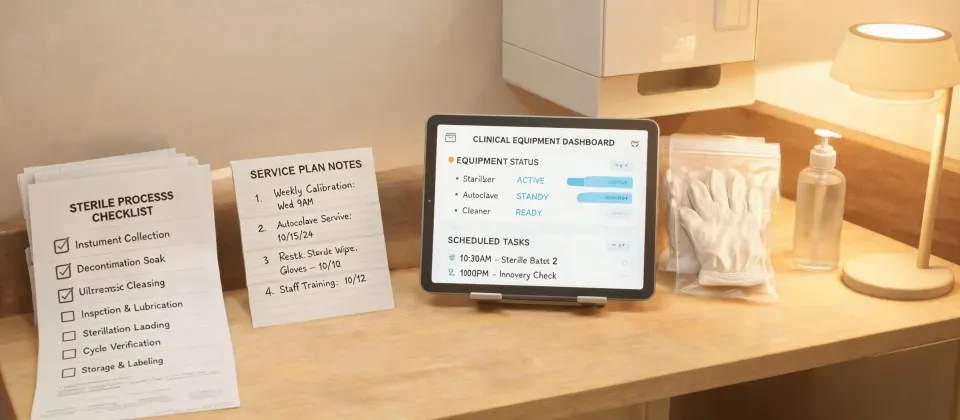
After the third rejection in Q1 2024 (yes, there was a third), I created our pre-purchase checklist. It's not fancy. But in the past 18 months, we've caught 47 potential errors using it—everything from connector mismatches to missing service contracts to EMR integration gaps.
The checklist has three sections today: compatibility, integration, and support. Compatibility means checking connectors, consumables, and existing infrastructure. Integration means verifying EMR and workflow fit. Support means confirming service SLAs and local coverage. Each section has 5-7 questions. It's boring. It's also the reason we haven't had a repeat of the 2019 pump fiasco. We also verify ISO 13485 certification for any new vendor—not because it guarantees quality, but because it shows the vendor has a documented quality management system.
The bottom line: there's no "best" medical equipment brand. There's only the equipment that fits your clinical workflow, your existing infrastructure, and your support reality. I recommend Smiths Medical for infusion and airway—but if you're dealing with a different category, don't assume their catalog covers it. Ask first. Then buy.
That's the mistake I made so you don't have to.