It was 9:47 on a Tuesday night. The caller was a nurse manager at a GI suite, and she didn't waste time with pleasantries. Her STERIS endoscope reprocessor had stopped mid-cycle, and twelve procedures were scheduled for 7 a.m.
I'm a service coordinator for a medical device company. In my role, I've handled more than 300 urgent equipment calls in six years—same-day turnarounds, overnight repairs, and a handful of genuine miracles. When I triage an urgent call, I ask three questions in order: How much time do we have? Can we get the right help and parts in that window? And what's the worst case if we can't? That routine—or rather, survival habit—keeps me from treating symptoms instead of causes.
The most important lesson I've learned isn't about one specific device. It's this: the equipment didn't break that night. It had been breaking for months.
The Surface Problem: A Machine Stopped Working
When a facility calls, the problem looks simple. “The autoclave won't cycle.” “The ECG machine won't power on.” “The dental handpiece is making a noise we've never heard.” These are real, urgent, expensive problems. But they're almost never the root problem.
Take the endoscope reprocessor call. The cycle error wasn't a random failure. The technician found a clogged detergent line and a filter that had been overdue for replacement. The water quality log showed hard water readings that should have triggered an alert days earlier. None of that happened overnight. It happened because nobody owned the weekly maintenance.
I've seen the same pattern with a dental handpiece that seized during a procedure. It wasn't the handpiece's fault. It had gone months without proper lubrication because the sterilizer's drying cycle wasn't long enough, so moisture and debris built up. And that happened because the person running the sterilizer had been trained to press start, but not why the full cycle mattered.
Last quarter alone, I tracked 47 urgent service requests. In 92% of them, the failed device had missed at least one scheduled check in the weeks before. The problem isn't the broken machine. It's the broken understanding of what keeps medical equipment healthy.
The Deeper Cause: Small Missed Checks Add Up
Honestly, I used to think equipment failures were random. Then I compared facilities that followed a 15-minute daily checklist with facilities that only called us after something failed. Over a full year, the difference wasn't subtle. The checklist facilities averaged one urgent call per quarter. The others averaged six. Same equipment, different discipline.
Seeing that side by side made me realize that “equipment failure” is usually just the last visible step in a chain of invisible small failures.
The assumption behind most failures
I once assumed a new biomed manager would ask for help if she wasn't sure about a maintenance schedule. She didn't. The result was an abandoned STERIS endoscope reprocessor cycle, a canceled procedure, and a conversation I still remember: “I didn't want to bother anyone.”
I don't blame her. The system gave her no way to know what she didn't know. That's why formal training matters. Good STERIS equipment training isn't a stack of slides. It's the space to ask, “Wait—what does this error code mean?” and get an answer before the machine is used on a patient.
The “it worked yesterday” trap
We all fall into this trap. A neonatal incubator seems fine because it heats up. An ECG machine produces a trace, so it seems connected. But a temperature sensor drifting by half a degree, or a lead wire with a hairline fracture, can deliver unreliable data for weeks before anyone catches it.
Let me answer a question I get often: what is a neonatal incubator? It's a temperature-controlled, humidity-controlled bed for premature or medically fragile newborns. It protects them from drafts, noise, and infection while keeping their environment stable. And it's a device where “close enough” isn't close enough. If the sensor is wrong, the incubator will still do what it's told—it just won't be doing the right thing.
An ECG machine is the same in a different way. It can power up, print a strip, and still be lying to you because a lead wire has been bent one time too many. The machine looks fine. The signal looks fine. The clinician has to make a decision anyway.
The same logic applies to a dental handpiece. It doesn't suddenly fail. It fails because the previous fifty cycles removed lubricant, accumulated residue, or overheated the bearings. Each cycle seemed fine. None of them were fine.
The Cost of “We'll Fix It Later”
When medical equipment fails, the cost is never just the repair invoice.
For a hospital with a full surgery schedule, a down sterilizer means cases get moved, staff get pulled around, surgeons get frustrated, and patients get rescheduled. A single canceled OR day can cost tens of thousands of dollars in lost revenue. I've watched it happen more times than I want to count.
One example from my experience: in March 2024, a clinic waited “to see if the problem fixed itself” with a dental handpiece that kept failing quality checks. By the time they called, six handpieces had contamination issues, and the repair bill came to nearly $9,000. A 30-minute weekly inspection would have caught the issue in week one, with a repair closer to $150.
Another facility skipped quarterly maintenance on a STERIS endoscope reprocessor to cut costs. The machine failed on a Friday afternoon. They paid an emergency service fee, overtime, and expedited parts—about $3,800 in extra costs, not including the stress or the rescheduling. That's the part nobody budgets for.
According to the CDC's Guideline for Disinfection and Sterilization in Healthcare Facilities, inadequate cleaning is a key contributor to sterilization failure. And per AAMI ST79, the industry standard for steam sterilization, cleaning and decontamination are the most critical step in the process. But here's the thing: that step only works if someone actually does it correctly, every time. You can't inspect quality into a device after it fails. You have to build it into the routine.
Why Training Is the Highest-Leverage Fix
I know what you might be thinking: “He's going to tell us to buy a new machine.” No. New machines develop the same problems if the people using them don't understand the why behind the process.
A few years ago, I only half-believed in training. I was the person who said, “It's straightforward; just read the manual.” Then a facility skipped formal STERIS equipment training, and three employees each developed their own workflow for the same endoscope reprocessor. One of those workflows was wrong. It took weeks and a damaged instrument to find that out. I changed my opinion after that, and I now insist that every facility let someone ask questions during training.
Early on, we didn't have a formal escalation process for after-hours warnings. It cost us when a nurse called the main line, got a recording, and the machine kept running until the next morning. We fixed the process before we changed any hardware.
Good training doesn't have to be long. It has to be practical. It should cover:
- What “good” looks like during a daily check—not just which button to press.
- Why water quality, filter changes, and cycle chemistry matter.
- Which warnings can wait until morning and which cannot.
- Who to call when the machine gives an error you don't recognize.
That last one is important. In my experience, about a third of emergency calls happen because someone saw a warning, wasn't trained on what it meant, and kept running the equipment until it shut down by itself. The ECRI Institute, which tracks health technology hazards, consistently places cleaning and maintenance failures near the top of its list—not because we lack technology, but because we lack consistent practice.
The Solution: Small Checks, Done on Purpose
So what actually prevents the 9:47 pm phone call?
Not one big fix. A set of small, intentional habits:
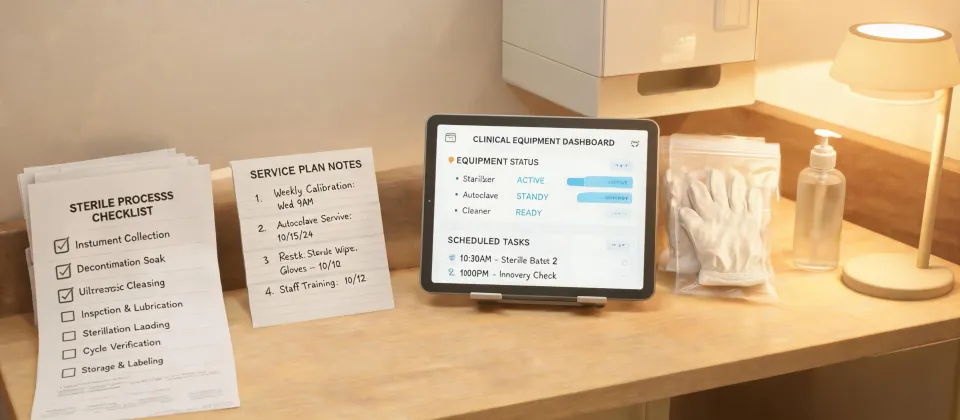
- A daily checklist that takes less time than the report people write after a failure.
- A preventive maintenance schedule based on manufacturer guidance, not memory.
- A clear escalation path: if you don't know whether a warning is urgent, there's a person to ask.
- Training that focuses on understanding, not attendance.
After three after-hours calls from the same facility in one month, I stopped asking “What broke?” and started asking “What did you skip?” That question changed how I triage every request. Now I build a 12-point checklist before anything goes into service, and I've seen it save facilities well into six figures in avoided downtime. The checklist itself is boring. That's the point. Five minutes of verification beats five hours of correction, every time.
The value of emergency service isn't simply speed. It's certainty—knowing someone will arrive with the right part and the right knowledge. And the next time a machine seems to fail randomly, ask what was skipped in the weeks before. The answer is where the real problem lives. If you need help building a process that catches it earlier, that's a conversation worth having—long before the 9:47 call.
