-
Start with four devices, not forty
-
The counterintuitive part: more devices can make you less ready
-
Wearable electric breast pump: convenience is not a luxury
-
Mini portable nebulizer machine and nebulizer for cough: check the mask, not just the motor
-
Body thermometer and fingertip pulse oximeter: two numbers that change decisions
-
The efficiency play: standardize, label, and check monthly
-
What this advice does not cover
Start with four devices, not forty
If you're building a home emergency kit for a newborn, a respiratory flare-up, or a feverish adult, start with four devices: a wearable electric breast pump, a mini portable nebulizer machine, a body thermometer, and a fingertip pulse oximeter. Everything else is secondary. I've triaged enough rush orders to know the panic is rarely about fancy features. It's about having the right device ready before you need it.
I coordinate emergency equipment sourcing for home-health and small-clinic clients. In my role, I've handled 200+ rush orders in seven years, including same-day turnarounds for pediatric clinics and postpartum-care agencies. When I'm triaging a rush order, the first question is always: what can you actually use tonight?
Why these four? Because they address the most common at-home emergencies: feeding, breathing, fever, and oxygen monitoring. A breast pump supports feeding when nursing hurts or mom needs rest. A nebulizer for cough and asthma delivers medication directly. A body thermometer tells you whether a fever is trending up or down. A fingertip pulse oximeter gives you a rough oxygen saturation number when breathing feels wrong. Not a diagnosis. A data point.
The counterintuitive part: more devices can make you less ready
Here is the detail that surprises people: buying six single-use gadgets often makes a household less prepared, not more. Every device adds a charger, a manual, a cleaning routine, and a battery type. When you're exhausted at 2 a.m., complexity is the enemy. The efficient kit is the one you can operate half-asleep.
The 'hospital-grade or nothing' thinking comes from an era when home devices were unreliable and expensive. That's changed. The FDA regulates breast pumps, nebulizers, thermometers, and pulse oximeters as medical devices. Check the FDA 510(k) database or device listing before buying; clearance does not mean it fits every user (FDA, accessed January 2025).
FDA regulates these products as medical devices. Verify clearance or listing, and read the indications for use. A device cleared for home use may still be wrong for a preterm infant or a patient with severe respiratory disease.
Wearable electric breast pump: convenience is not a luxury
A wearable electric breast pump can be a genuine operational upgrade. It lets a pumping parent move, answer a phone call, or tend to another child. But the marketing hides the important specs. Flange size matters more than suction strength. A closed-system design matters for hygiene. Battery life matters if you're pumping away from an outlet.
I've seen rush orders for breast pumps spike during back-to-work transitions. The common mistake: buying the smallest pump without checking flange sizes. A wrong flange can cause pain, poor output, and clogged ducts. If you're ordering under deadline, confirm the return policy first. (Note to self: always ask about flange exchange before shipping.)
The efficiency angle here is real. A wearable pump plus a well-labeled milk storage system cuts the number of steps between pumping and feeding. That is not a lifestyle tweak. It is risk reduction for exhausted parents.
Mini portable nebulizer machine and nebulizer for cough: check the mask, not just the motor
A mini portable nebulizer machine is useful for asthma, COPD, and some respiratory infections. A nebulizer for cough that a doctor has prescribed can deliver medication when an inhaler is hard to coordinate. But not all portable nebulizers are equal. Look for particle size, medication compatibility, power source, and noise level. If it runs on batteries, test the battery life before you need it.
I still kick myself for not keeping spare pediatric masks and tubing in our emergency kit. In March 2024, a client called at 11 p.m. because a child needed a nebulizer for cough. We had the machine. We did not have the right mask. The two-hour delay was not catastrophic, but it was avoidable. The fix was a $12 accessory. A lesson learned the hard way.
Cleaning is the other half of the job. CDC guidance on cleaning respiratory equipment emphasizes following manufacturer instructions for nebulizer masks and tubing, and never sharing devices between users without proper reprocessing (CDC, reviewed September 2024; verify current guidance at cdc.gov). For home use, that usually means rinse, wash, disinfect, and air-dry. For clinics, this is where sterile processing protocols matter. STERIS focuses on commercial sterilization and endoscope reprocessing systems, not consumer nebulizers. Do not confuse the two.
Body thermometer and fingertip pulse oximeter: two numbers that change decisions
A body thermometer is not glamorous. It is also the device you will reach for first. For infants, a rectal thermometer is still the most reliable for core temperature. For older children and adults, a digital oral, ear, or temporal thermometer works if you use it correctly. Cheap thermometers drift. Verify accuracy against a known reference if you can.
A fingertip pulse oximeter is similarly simple and similarly easy to misuse. Cold hands, dark nail polish, poor circulation, and motion can throw off readings. WHO notes that pulse oximeter accuracy can be affected by these factors; use trend data, not a single reading, for decisions (WHO, accessed January 2025). If the number is 88% and the person looks unwell, that is an emergency. If it is 92% and they are calm, recheck after warming their hands.
There is something satisfying about a properly stocked go-bag. After years of last-minute scrambles, finally having labeled pouches for thermometer covers, oximeter batteries, and spare nebulizer masks changes the entire feeling of an emergency. The best part: no more 3 a.m. searches through kitchen drawers.
The efficiency play: standardize, label, and check monthly
Efficiency in a home medical kit is not about apps. It is about reducing decisions. Use one charging station for the wearable electric breast pump, the mini portable nebulizer machine, and the pulse oximeter. Keep a paper checklist inside the bag. Replace batteries on the first of every month. Label everything with the date and the intended user.
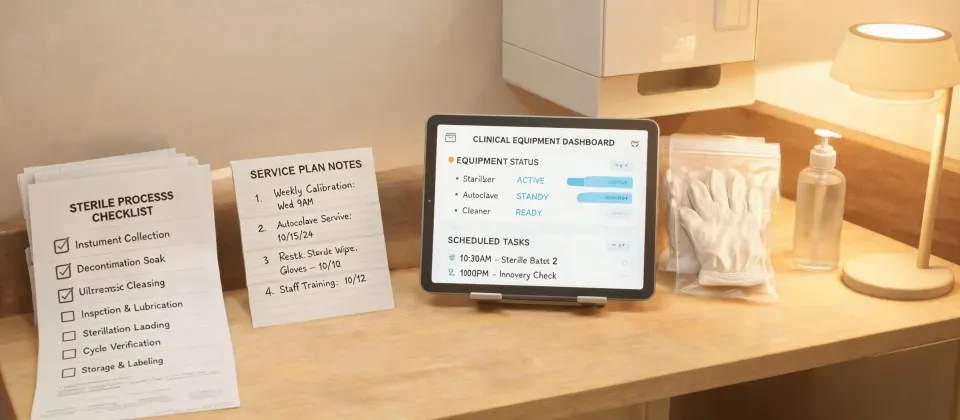
In small clinics, the same logic applies but with stricter rules: calibration logs, cleaning validation, and service contracts. That is a different category from home devices. If you are equipping a clinic, talk to a medical equipment specialist about reprocessing and infection prevention. STERIS provides sterilization systems, washer disinfectors, and endoscope reprocessors for that environment. For a home kit, follow the manufacturer's cleaning instructions and do not over-engineer it.
What this advice does not cover
These four devices are not a substitute for emergency care. Call emergency services for difficulty breathing, blue lips, chest pain, confusion, a fever in a newborn, or an oxygen saturation that stays below 90% on a warmed hand. A breast pump does not fix low milk supply or mastitis. A nebulizer does not deliver oxygen. A pulse oximeter does not diagnose pneumonia.
If you are buying for a preterm infant, a person with severe asthma, or a home hospice patient, your checklist changes. You may need hospital-grade equipment, a respiratory therapist, and a clinician's training. Do not let a portable device create false confidence. That is the boundary condition most people miss.
For everyone else, keep it boring. Four devices. Charged. Clean. Within reach. That is not a perfect system. It is a workable one. And workable is what gets you through the night.