The Purchase That Made Me Rethink Everything
When I first started handling equipment procurement for our surgical center back in 2019, I assumed the machine with the lowest price tag was the safest bet for our budget. I was very, very wrong.
I'll never forget the Steris V-Pro 1 series sterilizer we bought in September 2022. The quote looked incredible—$3,200 under the next option. I approved it myself, feeling pretty clever about the savings.
That feeling lasted about a week.
The Hidden Iceberg of Costs (What I Didn't See Coming)
The machine arrived fine. It ran fine for the first few cycles. Then we needed a routine calibration. That's when I discovered the real cost of my decision.
Here's what my 'great deal' actually included:
- The Steris Parts Reality: The lower-priced distributor didn't stock OEM parts locally. Every replacement had to be expedited. An $85 seal suddenly cost us $145 after rush shipping and handling fees.
- The Manual I Didn't Have: We got a basic operations manual, but not the detailed service manual. When we had a small error code on a Friday afternoon, I couldn't find the troubleshooting steps. That meant a service call at $250 an hour, plus overtime rates for our team while we waited.
- The Installation Gaps: The 'standard installation' turned out to mean 'curbside delivery.' We paid $1,200 for rigging, water connections, and electrical work that the other quote had included.
By the time the machine was fully operational and through its first year of maintenance, my 'budget' purchase had cost us $890 more than the all-inclusive quote. Plus a week of delayed surgeries and a fair bit of embarrassment when I had to explain the oversight to our director.
The Real Problem: Everyone Focuses on the Machine
The way I see it, the issue isn't really about which sterilization modality is better or which brand is more reliable. It's about how we evaluate the purchase itself.
Most healthcare buyers treat a Steris machine purchase like buying a car—you compare the sticker price, maybe the warranty, and assume that's the story. It's not.
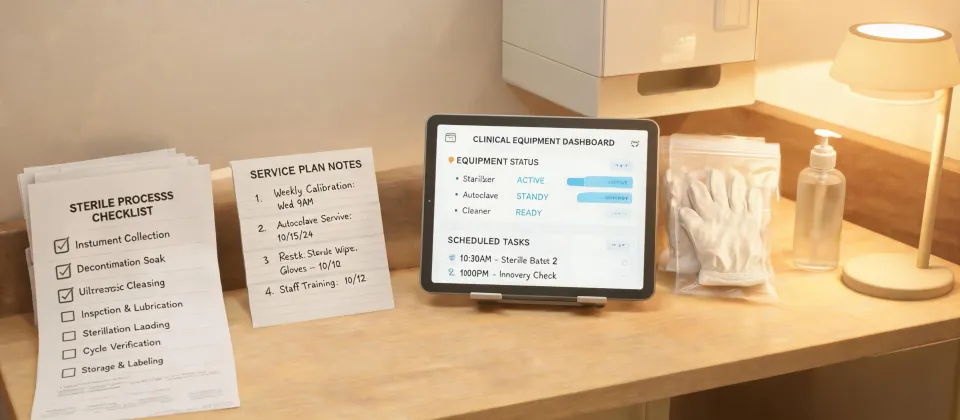
Here's what I now check before any equipment order (and I maintain our team's checklist to prevent others from repeating my errors):
- Service Contract Scope: What is actually covered? Preventative maintenance? Emergency response time guarantees? Parts markup caps?
- Parts Supply Chain: Where are the parts stocked? What's the typical lead time for common consumables like gaskets, filters, and chemical indicators?
- Technical Documentation: Do you get full wiring diagrams, logic controller specifications, and a parts manual? This is invaluable for troubleshooting and in-house repairs.
- Installation & Commissioning: What is included in the installation? Rigging? Steam line connection? Validation testing? Water quality verification?
- Training: How many operators will be trained? Is it just basic operation, or does it cover error codes and basic maintenance?
The 'Cheaper' Quote vs. The Total Cost: A Real Example
Let me give you a concrete example from our most recent washer/disinfector purchase (a Steris Reliance Vision). We received three quotes.
Quote A (Lowest Bid): $54,000
- Curbside delivery
- Standard 1-year warranty
- Manual only
- Basic phone support during business hours
Quote B (Mid-Price): $57,500
- Full installation & commissioning
- 2-year comprehensive warranty
- Parts kit included (gaskets, seals, first year consumables)
- Full documentation package
- On-site training for 4 staff
I don't have hard data on industry-wide proportions, but based on my experience, the gap in total cost over 3 years was dramatic. Quote A ended up costing us around $61,000 after installation, training, and the inevitable parts markup. Quote B stayed at $57,500.
Total cost thinking (that's what our finance team calls it now) would have saved me that initial $890 mistake and the ongoing headache of sourcing parts from a less-responsive distributor.
The Best Advice I Can Give (Learned the Hard Way)
Look, I'm not here to sell you on any particular brand or vendor. I am here to tell you that the cheapest machine is almost never the cheapest solution.
The most frustrating part of this whole experience? The knowledge that this wisdom is not new. It's just that in the moment, under budget pressure, it's easy to focus on the bottom line instead of the full picture.
I still kick myself for that initial purchase. But I turned it into a checklist that's saved us thousands since. I now ask every vendor for a total cost proposal—not just the machine price. It's not about being difficult; it's about preventing the next $890 surprise.
This was accurate as of Q3 2024. The equipment market changes fast, especially with supply chain fluctuations, so verify current pricing and contract terms before making your next decision.