The Setup: A Routine Order That Wasn't
Look, I've been handling service contracts and parts orders for Steris equipment for about six years now. You'd think by 2024, I'd have the process down cold. And I mostly do. But there's this one category—surgical instruments for specialized dental procedures—that has a specific quirk. A quirk I learned about the hard way.
In September 2022, I was putting together a sizable order for a new client, a regional dental surgery center that had just opened. They needed a suite of Steris surgical instruments, a mobile sterile processing unit to go with it, and we were also helping them spec out the right dental sealant. Plus, they needed to know how to use a nebulizer for certain patient prep steps. Standard stuff, right?
The order total came to about $3,200. Not our biggest, but significant enough. I checked the instrument list myself, approved it, and sent it to procurement. Felt good about it. The client was happy, the paperwork was clean, and I was moving on to the next project.
The Surprise: It Wasn't the Instruments
The surprise wasn't that the instruments were wrong. They were perfect. Steris surgical instruments are built like tanks, and for the procedures this center was doing, the selection was spot on. The surprise came from something I had mentally filed under 'minor logistical detail': the compatibility with their dental sealant.
Never expected a sealant spec to be the bottleneck. Turns out the 'this should work fine' advice ignores how different brands of dental sealants interact with specific instrument sterilization protocols.
You see, the dental sealant they were using (a specialty one for pediatric patients) had a curing time and temperature sensitivity that wasn't compatible with the pre-programmed cycle on the mobile sterile processing unit we'd delivered. The unit was standard—it handled Steris and most other major brands perfectly. But this particular sealant required a slightly lower pre-vacuum temperature and a longer dry time. I didn't know. The client didn't know. And the manual for the mobile unit didn't explicitly say 'this cycle doesn't work with X-brand sealant.'
The Moment of Truth
The error was caught during the first round of instrument processing. The first batch of instruments came out of the sterilizer with a faint, sticky residue. The dental sealant had partially rehydrated and smeared. It looked fine on the tray. In reality, it was a $3,200 batch of instruments plus a $900 investment in the specialized sealant (note to self: always double-check the cycle compatibility).
We had to re-process everything. That cost $890 in redo supplies plus a 1-week delay for the center's opening. In that delay, we also had to re-educate the staff on how to use a nebulizer for the procedure, because the sealant's unique properties also affected the patient's airway management. One week of delays, $890 in direct costs, and a lot of embarrassed phone calls to the center director.
The Lesson: It's Not Just the Steris Order
People think expensive vendors deliver better quality. Actually, vendors who deliver quality can charge more. The causation runs the other way. But more importantly, the assumption that a Steris mobile sterile processing unit 'will work with every dental sealant' is a simplification that ignores the nuance of material science.
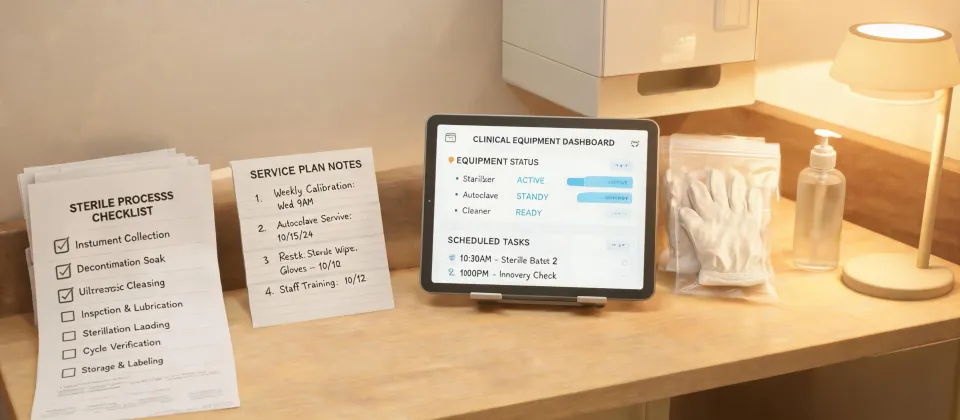
Here's the thing: the Steris equipment itself was flawless. The problem was the system around it. The process for ordering surgical energy devices and associated supplies wasn't the issue. The issue was that our checklist for 'dental sealant compatibility' didn't exist. We had a checklist for the instruments, the unit, and the service contracts. We didn't have one for the consumables that interact with the sterilization cycle.
So now, for every order that involves a dental sealant and a mobile sterile processing unit, I have a specific step: verify the sealant's technical data sheet against the unit's cycle parameters. It takes 15 minutes. It's saved us from at least three more potential disasters in the past 18 months.
Re-Examining the 'How to Use a Nebulizer' Connection
And that nebulizer thing? The one I mentioned earlier? The procedure this center specialized in required a pre-procedure nebulizer treatment with a specific medication. The sealant's interaction with the patient's airway was a known issue for the manufacturer, but it wasn't on our radar. We had to order a different type of nebulizer—a breath-actuated one, not a standard jet nebulizer—to deliver the medication without interfering with the sealant's setting time.
A $3,200 order. A $900 consumables budget. A 1-week delay. All because I didn't verify a dental sealant spec against a standard sterilization protocol. The instruments weren't the problem. The surgical energy device wasn't the problem. The mobile unit wasn't the problem. The problem was the assumption that 'this should work fine.'
Final thought: The $890 in redo costs was a cheap lesson. The real cost was the week of lost credibility with a new client. Don't let a tiny spec detail be the thing that makes you look unprofessional. Check the consumables. Always.